Psychedelics are changing how we think about the mind.
These powerful substances can alter your thoughts and feelings in ways that challenge our ideas about consciousness.
Research shows that psychedelics may help treat mental health issues like depression and anxiety by changing brain activity and increasing flexibility in thinking.

Scientists are studying how psychedelics work in the brain.
They’re finding that these drugs can affect networks involved in self-awareness and perception.
This research is giving us new ways to look at how the mind functions.
The effects of psychedelics go beyond just the brain.
They can change how you see yourself and the world around you.
This has led to talks about what consciousness really is and how psychedelics might help us understand it better.
Key Takeaways
- Psychedelics can change brain activity and thinking patterns in ways that may help treat mental health issues.
- Research on psychedelics is giving new insights into how the human mind and consciousness work.
- The effects of psychedelics raise questions about the nature of self and reality.
Historical Context of Psychedelics
Psychedelics have a long and complex history spanning ancient cultures to modern scientific research.
Their use has shaped spiritual practices and influenced scientific understanding of consciousness.
Early Use and Cultural Significance
Psychedelics played a role in ancient spiritual traditions across many cultures.
You can trace their use back thousands of years in religious ceremonies and healing rituals.
Indigenous peoples in the Americas used plants like peyote and ayahuasca for spiritual purposes.
These practices continue today in some communities.
In ancient Greece, some scholars believe psychedelics may have influenced the development of Hellenism.
This shows how these substances potentially shaped religious and philosophical thought.
Psychedelic use may have impacted the evolution of human consciousness and the birth of religions.
This idea challenges traditional views on spiritual experiences and altered states of mind.
Regulation and Controlled Substances
In the mid-20th century, psychedelics gained attention in Western scientific research.
Scientists studied their potential therapeutic uses for mental health conditions.
However, by the 1960s, concerns about recreational use led to strict regulations.
Many countries classified psychedelics as controlled substances, limiting research and medical use.
The Controlled Substances Act in the United States placed most psychedelics in the most restrictive category.
This classification made research difficult and effectively halted many studies.
Recent years have seen a resurgence of interest in psychedelic research.
You’re now seeing renewed efforts to explore their therapeutic potential under controlled conditions.
The Psychedelic Experience
Psychedelic substances can induce profound changes in perception, cognition, and self-awareness.
These experiences often involve altered sensory input, shifts in thought patterns, and feelings of connectedness or transcendence.
Subjective and Mystical Experiences
During a psychedelic experience, you may encounter vivid visual and auditory changes.
Colors might seem brighter or objects may appear to move or breathe.
Your thoughts may flow more freely, leading to new insights or perspectives.
Spiritual experiences are common, with many users reporting feelings of unity with the universe or a higher power.
You might feel a deep sense of peace, love, or understanding.
Time perception often shifts dramatically.
Minutes can feel like hours, or entire lifetimes may seem to pass in moments.
Ego Dissolution and Self-Consciousness
Psychedelics can temporarily alter your sense of self.
This ego dissolution involves a breakdown of the usual boundaries between you and the world around you.
You may feel a merging with your surroundings or a loss of individual identity.
This can be both liberating and unsettling.
Self-referential thought processes often decrease.
Instead of focusing on personal concerns, you might experience a broader, less self-centered perspective.
Altered States of Consciousness
Psychedelics induce non-ordinary states of awareness.
Your normal waking consciousness gives way to radically different modes of perception and thinking.
You may experience:
- Synesthesia (blending of senses)
- Enhanced pattern recognition
- Feelings of cosmic significance
- Dissolution of conceptual boundaries
These states can offer unique insights into the nature of consciousness and reality. Many users report gaining new perspectives on their lives and the world around them.
Neuroscience Behind Psychedelics
Psychedelics affect your brain in complex ways.
They change how different brain areas talk to each other and can even rewire neural connections. Let’s explore the key brain mechanisms involved.
Brain Function and Neuroimaging
Brain imaging studies show that psychedelics alter your brain’s activity patterns.
When you take psychedelics, parts of your brain that don’t usually communicate start talking to each other. This is called increased functional connectivity.
Your default mode network (DMN) becomes less active.
The DMN is involved in self-reflection and thinking about the past or future. When it’s quieter, you may feel more present in the moment.
fMRI scans reveal changes in blood flow to different brain regions.
Areas involved in sensory processing, emotions, and higher-level thinking show altered activity.
Neuroplasticity and Neural Circuitry
Psychedelics can make your brain more flexible.
They boost neuroplasticity – your brain’s ability to form new connections and rewire itself.
This happens through several mechanisms:
- Increased growth of dendrites (branch-like structures on neurons)
- Formation of new synapses (connection points between neurons)
- Changes in gene expression related to brain plasticity
These effects may last beyond the immediate drug experience.
They could help explain why some people report lasting positive changes after psychedelic use.
Your brain’s usual pathways of information flow are disrupted.
This allows for new, unusual patterns of neural firing and communication between brain regions.
Serotonin Receptors and Brain Chemistry
Psychedelics work mainly by activating serotonin receptors in your brain.
Specifically, they target the 5-HT2A receptor subtype.
When these receptors are activated, they trigger a cascade of effects:
- Changes in neurotransmitter release
- Alterations in electrical signaling between neurons
- Shifts in gene expression within brain cells
Your brain’s levels of glutamate, the main excitatory neurotransmitter, increase.
This may contribute to the heightened sensory experiences and thought patterns during a psychedelic trip.
Other neurotransmitter systems, like dopamine, are also affected.
This complex interplay of brain chemicals underlies the profound cognitive and perceptual changes you experience.
Psychological and Behavioral Effects
Psychedelics have far-reaching effects on the human mind and behavior.
They alter cognition, perception, and mental states in profound ways. These substances can also impact mental health conditions and change how people think and act.
Cognition and Perception
Psychedelics change how you process information and experience the world around you.
They can make colors seem brighter and sounds more intense. Your thoughts may flow more freely and creatively.
Psychedelic compounds can lead to vivid visions and a feeling of transcending normal reality.
You may experience synesthesia, where senses blend together. For example, you might “see” music or “taste” colors.
Time perception often changes dramatically.
A few minutes might feel like hours. Your sense of self may dissolve, leading to ego dissolution. This can result in feelings of unity with the universe.
Mental Health and Psychiatric Disorders
Psychedelics show promise for treating various mental health conditions.
They may help with depression, anxiety, addiction, and PTSD.
In controlled settings, these substances can lead to emotional breakthroughs.
You might gain new perspectives on past traumas or current struggles. This can help you process difficult experiences in new ways.
Psychedelic-assisted therapy is being studied for treating psychiatric disorders.
Early results are promising, but more research is needed. It’s crucial to use these substances carefully under professional guidance.
Behavioral Changes and Cognitive Flexibility
Psychedelics can increase your cognitive flexibility. This means you may think more creatively and adapt to new situations more easily.
You might break out of rigid thought patterns and habits.
These compounds can make your mind more malleable. This openness can help you change long-standing behaviors.
You may find it easier to adopt new, healthier habits.
Your sense of identity might shift. Psychedelics can reshape your inner narrative. This can lead to lasting changes in how you see yourself and the world.
You may feel more connected to others and nature after a psychedelic experience.
Therapeutic Uses of Psychedelics
Psychedelics are showing promise as treatments for various mental health conditions.
Studies suggest they may help with depression, addiction, and PTSD when used in controlled settings.
Psychedelic Therapy for Mental Disorders
Psychedelic therapy uses substances like psilocybin, LSD, and MDMA to treat mental health issues. You might find it helpful for major depressive disorder, addiction, or post-traumatic stress disorder.
Psilocybin, found in some mushrooms, may reduce depression symptoms. It can change how you think and feel in positive ways.
MDMA therapy shows promise for PTSD. It may help you process trauma more easily.
Ketamine can quickly improve mood in some people with depression. You might notice effects within hours or days.
Clinical Trials and Evidence
Scientists are studying psychedelics carefully to see if they work and are safe. Randomized controlled trials test these drugs against placebos.
Recent studies on psilocybin for depression look promising. Many people felt better after just one or two doses.
MDMA trials for PTSD also show good results. A lot of patients improved after MDMA therapy sessions.
Ketamine clinics are already open in some places. You can get treatments there for depression that doesn’t respond to other drugs.
Ethical and Practical Considerations
Using psychedelics for therapy raises some questions. You need to think about safety and proper use.
Therapists must be trained to guide psychedelic sessions. They help keep you safe and get the most benefit.
There’s a risk of misuse outside of therapy. You shouldn’t try these drugs on your own.
Some worry about changing brain chemistry. But studies show psychedelics can be safe when used correctly.
Cost and access are issues too. Not everyone can get these treatments yet.
Cultural and Philosophical Implications
Psychedelics are changing how we see the world and ourselves. These substances raise big questions about the nature of reality and human experience.
Shifts in Perception and Reality
Psychedelics can dramatically alter your perception. Colors may seem brighter, patterns more vivid. Your sense of time and space might warp. These changes make you question what’s “real.”
Some users report feeling connected to everything around them. The lines between self and other can blur. This challenges the idea of a fixed, separate identity.
Studies suggest psychedelics may increase openness to new ideas. You might become more flexible in your thinking. Old beliefs and assumptions can shift.
Impact on Spirituality and Religion
Psychedelic experiences often feel deeply spiritual. You may sense a greater meaning or purpose to life. Some describe encounters with divine beings or a universal consciousness.
These experiences can strengthen existing religious beliefs. For others, they spark interest in new spiritual practices.
Meditation and mindfulness often appeal to psychedelic users.
Some religious groups use psychedelics in ceremonies. The Native American Church, for example, uses peyote. Ayahuasca churches have spread from the Amazon to many countries.
Materialism, Panpsychism, and Metaphysics
Psychedelics challenge materialist views of consciousness. You might feel your mind is more than just brain activity. This can lead to interest in theories like panpsychism.
Panpsychism suggests consciousness is a fundamental feature of the universe. It’s found everywhere, not just in brains. This idea resonates with many psychedelic experiences.
Research indicates psychedelics can change metaphysical beliefs. You might become more open to non-materialist views of reality. This shift can impact your whole worldview.
Future Directions
Psychedelics are poised to reshape mental health treatment and our understanding of consciousness. New policies, research, and public awareness will drive progress in this field.
Policy and Legal Landscape
The legal status of psychedelics is evolving. Several U.S. states and cities have decriminalized or legalized certain psychedelics for medical or personal use. You can expect more changes in the coming years.
Regulatory bodies are developing frameworks for psychedelic-assisted therapies. This includes:
- Guidelines for therapist training
- Safety protocols for clinical use
- Quality standards for psychedelic substances
As research progresses, policies may shift to allow broader access to psychedelic treatments for neuropsychiatric disorders.
Ongoing Research and Developments
Scientists are exploring new frontiers in psychedelic research. Current areas of focus include:
- Neuroimaging studies to map brain activity during psychedelic experiences
- Development of novel psychedelic compounds with tailored effects
- Long-term outcomes of psychedelic-assisted therapies
Cognitive neuroscience is uncovering how psychedelics affect perception, emotion, and thought processes. This research may lead to breakthroughs in treating conditions like depression, PTSD, and addiction.
Public Perception and Education
Public opinion on psychedelics is changing. More people are becoming aware of their potential benefits and risks. Education efforts are crucial to promote responsible use and dispel myths.
You’ll likely see more:
- Public health campaigns about psychedelic safety
- Integration of psychedelic education in medical and psychology curricula
- Media coverage of psychedelic research and therapies
Surveys show growing acceptance of psychedelics for medical use. As understanding improves, stigma may decrease, leading to more open discussions about their role in society and healthcare.
Frequently Asked Questions
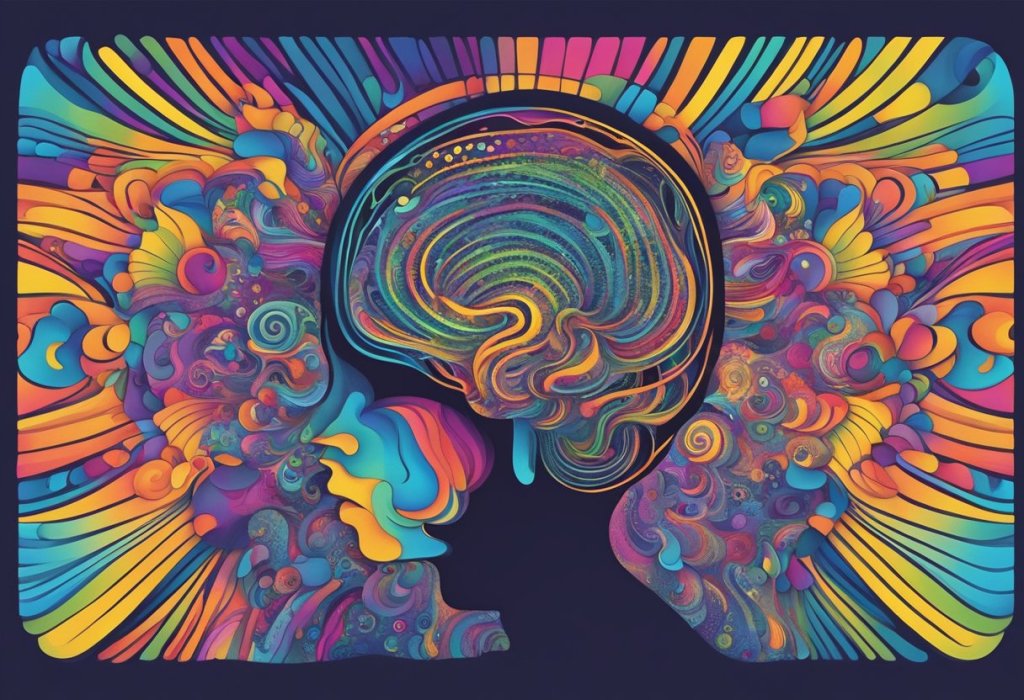
Psychedelics affect brain function, mental health, and personal beliefs in complex ways. Their mechanisms, effects, and potential risks are important to understand.
What neurobiological mechanisms are influenced by psychedelics to alter mind perception?
Psychedelics mainly work by activating serotonin receptors in the brain, especially the 5-HT2A receptor. This leads to changes in brain activity and connectivity.
Psychedelics can reduce activity in the default mode network, a brain system linked to self-reflection and mental chatter. This may lead to altered perceptions and ego dissolution.
Can long-term changes in brain plasticity be attributed to psychedelic experiences?
Research suggests psychedelics can increase neuroplasticity, the brain’s ability to form new connections. This effect may last weeks or months after a single dose.
Increased plasticity could help explain why psychedelics show promise for treating depression and addiction. They may allow the brain to break out of rigid thought patterns.
What are the potential therapeutic benefits of psychedelics for mental health disorders?
Psychedelics show promise for treating depression, anxiety, PTSD, and addiction. They may help patients gain new perspectives on their problems.
In clinical trials, substances like psilocybin and MDMA have produced rapid and lasting improvements in some patients who didn’t respond to standard treatments.
How do psychedelics impact cognitive functions and consciousness?
Psychedelics can profoundly alter consciousness, perception, and thinking. Users often report mystical-type experiences and feelings of unity with their surroundings.
Short-term effects can include visual hallucinations, synesthesia, and altered sense of time. Some users report enhanced creativity and problem-solving abilities.
In what ways can psychedelic use impact an individual’s belief systems?
Psychedelic experiences can lead to shifts in personal values and beliefs. Many users report increased openness, empathy, and connection to nature.
Some people have life-changing spiritual or philosophical insights. These shifts in perspective can persist long after the acute effects wear off.
What are the risks and potential side effects associated with the use of psychedelics on mental health?
Psychedelics can trigger anxiety or panic, especially in unprepared users.
There’s a risk of exacerbating underlying mental health conditions like schizophrenia.
Rarely, users may experience prolonged psychosis or hallucinogen persisting perception disorder (HPPD).
It’s crucial to use psychedelics in safe, controlled settings.




Leave a reply to Does the Zero Point Field Connect All Consciousness? Exploring Quantum Consciousness Theories – Potent U Cancel reply