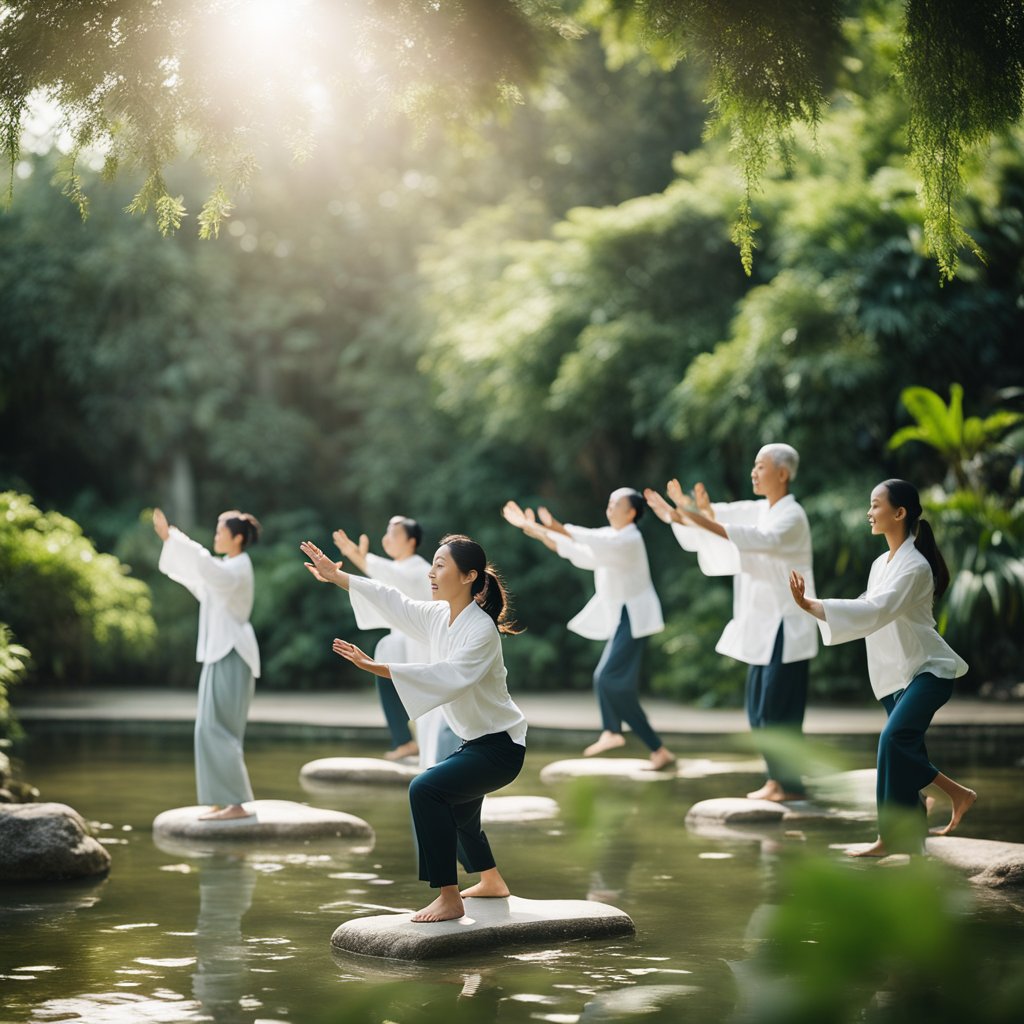
Qigong is an ancient Chinese practice that combines gentle movements, breathing techniques, and meditation. It aims to balance your body’s energy, or “qi,” for better health and well-being.
Qigong practices can help reduce stress, improve flexibility, and boost your overall physical and mental health.

You might wonder how to start your qigong journey. It’s easier than you think.
You can begin with simple standing exercises and breathing techniques. As you progress, you can explore different types of qigong, like medical qigong for healing or spiritual qigong for personal growth.
Regular qigong practice can fit into your daily routine. Even a few minutes each day can make a difference.
You can do qigong at home, in a park, or with a group. It’s a flexible practice that adapts to your needs and schedule.
Key Takeaways
- Qigong combines movement, breathing, and meditation to balance your body’s energy
- You can start with simple exercises and gradually explore different types of qigong
- Regular practice can improve your physical and mental health
Origins and Philosophy of Qigong
Qigong has deep roots in Chinese history and philosophy. It combines ancient practices with traditional medicine to promote health and well-being.
Historical Background
Qigong’s history spans over 4,000 years. It began with shamanistic dances in the Neolithic era. These early practices evolved into more structured forms over time.
In 1973, archaeologists found the Daoyin Tu painting. This ancient artwork shows 44 qigong-like postures. It proves qigong’s long-standing presence in Chinese culture.
Qigong developed alongside other Chinese practices. These include Traditional Chinese Medicine (TCM), martial arts, and meditation. Each influenced qigong’s growth and spread.
Qigong and Traditional Chinese Medicine
Qigong is closely linked to TCM. Both focus on the concept of qi, or life energy. TCM aims to balance this energy for good health.
In qigong, you use movement, breathing, and mental focus to manage your qi. This practice can help prevent illness and promote healing.
TCM doctors often recommend qigong as part of treatment plans. It complements other TCM methods like acupuncture and herbal medicine.
Philosophical Foundations
Qigong’s philosophy draws from several Chinese traditions. These include Daoism, Buddhism, and Confucianism.
The Daoist concept of yin and yang is central to qigong. It teaches balance between opposing forces. Qigong aims to harmonize these energies within your body.
Qigong also emphasizes the connection between mind, body, and spirit. You learn to cultivate inner peace and align with nature’s rhythms.
By practicing qigong, you seek to improve not just physical health, but also mental and spiritual well-being.
Understanding Qi
Qi is a central concept in Chinese philosophy and medicine. It refers to the vital energy that flows through all living things. This energy plays a key role in health and wellness.
Concept of Life Force
Qi is often described as the “life force” that animates all living beings. You can think of it as the energy that keeps you alive and functioning. In Chinese thought, qi flows through your body along specific pathways called meridians.
This life force isn’t just inside you. It’s also present in nature. The air you breathe, the food you eat, and even the emotions you feel are all forms of qi.
Qi isn’t static. It’s always moving and changing. When qi flows freely, you’re healthy. But if it gets blocked or unbalanced, illness can occur.
Qi in Health and Wellness
Your qi affects both your physical and mental health. Good qi flow can boost your immune system, increase your energy, and improve your mood.
Here are some ways qi impacts your wellness:
- Physical health: Qi helps your body fight off illness and heal injuries.
- Mental clarity: Balanced qi can sharpen your focus and reduce stress.
- Emotional stability: Smooth qi flow promotes emotional balance.
Many practices aim to improve qi flow:
- Qigong exercises
- Acupuncture
- Herbal medicine
- Tai chi
- Meditation
These methods can help you maintain good health by keeping your qi balanced and flowing smoothly. By understanding and working with your qi, you can take an active role in your own wellness.
Types of Qigong Practices
Qigong comes in several forms, each with unique focuses and benefits. The main types are medical, martial, and spiritual qigong. Each type uses different qigong exercises to achieve specific goals.
Medical Qigong
Medical qigong aims to improve health and treat illnesses. It uses gentle movements, breathing, and meditation to balance your body’s energy.
You can practice qigong for 30-40 minutes daily to see benefits. This type often helps with pain, sleep, and overall function.
Medical qigong exercises may include:
- Slow, flowing movements
- Focused breathing techniques
- Visualizations for healing
- Self-massage
These practices can boost your immune system and help manage chronic conditions.
Martial Qigong
Martial qigong focuses on building strength and power for self-defense. It’s often part of traditional martial arts training.
Key aspects of martial qigong include:
- Stance training for stability
- Dynamic tension exercises
- Breath control for power
- Energy circulation techniques
These practices aim to increase your physical strength and internal energy. You’ll learn to direct your qi for both offensive and defensive purposes.
Martial qigong can improve your balance, coordination, and body awareness. It also teaches you to stay calm under pressure.
Spiritual Qigong
Spiritual qigong aims to connect you with higher states of consciousness. It often involves meditation and energy cultivation practices.
Common spiritual qigong techniques include:
- Seated meditation
- Standing post exercises
- Chanting or sound healing
- Visualization of energy centers
These qigong practices can help you reduce stress and find inner peace. They may also boost your intuition and spiritual awareness.
Spiritual qigong can be a path to self-discovery and personal growth. It often leads to a deeper understanding of yourself and the world around you.
Techniques and Fundamentals
Qigong uses a mix of key practices to improve health and energy. These techniques work together to create balance in your body and mind.
Posture
Good posture is vital in qigong. Stand with your feet shoulder-width apart. Keep your knees slightly bent. Relax your shoulders and let your arms hang loosely at your sides.
Tuck your chin slightly to lengthen the back of your neck. Imagine a string pulling the top of your head up. This aligns your spine and helps energy flow.
In seated poses, sit up straight. Keep your back away from the chair. Place your hands on your thighs. Make sure both feet touch the ground.
Movement
Qigong movements are slow and smooth. They often mimic nature, like waves or trees swaying. Move from your center, not just your arms and legs.
Common moves include arm circles, gentle twists, and slow squats. The “White Crane Spreads Its Wings” is a popular move. Raise your arms out to the sides as you inhale. Lower them as you exhale.
Do each move mindfully. Pay attention to how your body feels. Don’t strain or push too hard. The goal is to move with ease and grace.
Breath
Breathing is a key part of qigong. Use deep, slow breaths. Breathe from your belly, not your chest. This is called diaphragmatic breathing.
Inhale through your nose. Let your belly expand. Exhale slowly through your mouth. Feel your belly sink back in.
Try to match your breath to your movements. Inhale as you lift or expand. Exhale as you lower or contract. This links your breath to your body’s motion.
Some practices use specific breath patterns. Always follow your teacher’s guidance for these techniques.
Focus
Mental focus is crucial in qigong. It helps you stay present and aware. Direct your attention to your body and breath.
Picture energy flowing through you as you move and breathe. This is called “qi” in Chinese. You might imagine it as light or warmth.
Use visualization to enhance your practice. For example, picture roots growing from your feet into the ground. This can help you feel stable and grounded.
Stay focused on the present moment. If your mind wanders, gently bring it back to your body and breath.
Relaxation
Relaxation is a core principle of qigong. It’s called “fang song” in Chinese. This means letting go of tension in your body and mind.
Start by relaxing your face. Soften your jaw and forehead. Let your shoulders drop away from your ears. Relax your hands and fingers.
Feel the tension melt away from your muscles as you move. Don’t force or strain. Let your movements flow naturally.
Take time to scan your body for areas of tightness. When you find them, breathe into those spots and let them soften. Remember, relaxation is key to allowing energy to flow freely in qigong.
Health Benefits of Qigong
Qigong offers many health advantages. It can boost your physical fitness, improve your mental state, and enhance your overall quality of life. Let’s explore these benefits in more detail.
Physical Health Improvements
Qigong can strengthen your body in several ways. It may help reduce chronic pain, especially for conditions like fibromyalgia.
Regular practice can improve your balance and flexibility, lowering your risk of falls. You might notice better posture and increased muscle strength.
Qigong exercises often focus on gentle, flowing movements that can ease joint stiffness and enhance mobility.
Your cardiovascular health may benefit too. Some studies suggest qigong can help lower blood pressure and improve heart function. It may also boost your immune system, helping you fight off illnesses more effectively.
Mental and Emotional Well-being
Qigong isn’t just good for your body – it’s great for your mind too. The practice combines movement with mindfulness, helping you reduce stress and anxiety.
You might find yourself feeling calmer and more centered after qigong sessions. The meditative aspects can improve your focus and concentration, potentially boosting your work performance.
Qigong may also help with mood disorders. Some people report reduced symptoms of depression after regular practice. The mindful breathing techniques can promote relaxation and better sleep quality.
Longevity and Life Quality
Qigong might help you live a longer, healthier life. Its gentle nature makes it suitable for people of all ages and fitness levels.
Regular practice can improve your overall energy levels and vitality. You might feel more alive and engaged in your daily activities.
Qigong’s emphasis on balance and harmony can lead to better overall wellness. It may help you develop a more positive outlook on life and improve your relationships with others.
Some studies suggest qigong might even have anti-aging effects, potentially slowing cellular aging processes. While more research is needed, many practitioners report feeling younger and more vibrant with consistent practice.
Mindfulness and Qigong
Qigong and mindfulness work together to improve your physical and mental well-being. These practices help you focus on the present moment and connect with your body and breath.
The Role of Mindfulness
Mindfulness is key in qigong. It helps you pay attention to your movements and breathing.
When you practice qigong, you focus on how your body feels and moves. This focus can help reduce stress and make you feel calmer.
Mindfulness in qigong can improve your focus in daily life. It teaches you to stay in the present. This skill can help you at work or in your personal life.
Mindful qigong can also help with:
- Better sleep
- Less worry
- More energy
- Clearer thinking
Incorporating Mindfulness into Qigong
To add mindfulness to your qigong practice:
- Start with deep breaths. Feel the air moving in and out.
- Pay attention to each movement. Notice how your muscles feel.
- If your mind wanders, gently bring it back to your body and breath.
Qigong meditation can boost your mindfulness skills. Try to practice for a few minutes each day. You can do it sitting, standing, or even walking.
Remember, there’s no “perfect” way to do qigong. The goal is to be present and aware. With regular practice, you’ll get better at staying focused and calm.
Learning and Practicing Qigong
Qigong is a practice that can be learned and developed over time. It offers benefits for both physical and mental well-being.
Getting Started with Qigong
Begin your qigong journey with simple exercises. Focus on your breath and body awareness. Try these basic moves:
- Standing meditation
- Gentle arm swings
- Slow walking
Start with 10-15 minutes daily. As you get comfortable, add more time and new moves.
Pay attention to your posture. Keep your spine straight and relax your shoulders. Let your breath flow naturally.
Remember, qigong is about moving slowly and mindfully. Don’t rush or force any movements.
Workshops and Classes
Qigong workshops offer a great way to learn from experts. You’ll get hands-on guidance and meet others interested in qigong.
Look for classes at:
- Community centers
- Yoga studios
- Martial arts schools
Online classes are also available. They give you flexibility to learn at your own pace.
In group settings, you can ask questions and get feedback on your form. This helps you avoid common mistakes.
Developing a Personal Practice
Create a regular qigong routine at home. Pick a quiet spot where you won’t be disturbed. Set a specific time each day for your practice.
Start with 5-10 minutes and gradually increase. Be consistent – daily practice brings the most benefits.
Choose exercises you enjoy. This makes it easier to stick with your routine. Mix different moves to keep things interesting.
Listen to your body. If something doesn’t feel right, adjust or skip that move. Qigong should never cause pain.
Track your progress. Note how you feel before and after each session. This can motivate you to keep practicing.
Integrating Qigong into Daily Life

Qigong can be a powerful tool for enhancing your health and wellness. By incorporating these practices into your daily routine, you can reap the benefits of improved energy, reduced stress, and better overall well-being.
Everyday Qigong Practices
Start your day with a simple 5-minute Qigong routine. Focus on deep breathing and gentle movements to wake up your body and mind.
Try the “Qi Gong posture while working at your desk” to maintain good posture and energy flow.
Take short Qigong breaks throughout the day. Practice mindful breathing while waiting in line or during your commute. This helps you stay centered and calm.
Before bed, do a relaxing Qigong sequence to unwind. Focus on slow, gentle movements and deep breathing to prepare your body for restful sleep.
Qigong for Workplace Wellness
Incorporate Qigong into your work routine to boost productivity and reduce stress. Take a 5-minute Qigong break every hour to refresh your mind and body.
Try these simple exercises at your desk:
- Shoulder rolls
- Neck stretches
- Seated spinal twists
- Hand and wrist exercises
Use 5-minute practices when pressed for time. Even short sessions can help you stay focused and energized throughout the workday.
Qigong and Lifestyle Changes
Make Qigong a part of your daily self-care routine. Practice outdoors when possible to connect with nature and boost your Qi energy.
Combine Qigong with other healthy habits:
- Eat a balanced diet
- Stay hydrated
- Get enough sleep
- Reduce stress through meditation
Create circadian-infused rituals by practicing Qigong at specific times of day. This can help regulate your body’s natural rhythms and improve overall health.
Consider joining a Qigong class or group to stay motivated and learn new techniques. Sharing your practice with others can enhance your experience and keep you committed to your Qigong journey.
Frequently Asked Questions
Qigong practices involve foundational principles, basic techniques, and potential benefits for overall well-being. Understanding the role of qigong in traditional Chinese medicine and its connection to the five phases can enhance your practice.
What are the foundational principles of qigong for beginners?
Qigong beginners should focus on proper breathing, body alignment, and mental focus.
Breathe deeply and slowly from your diaphragm. Keep your spine straight and shoulders relaxed. Clear your mind and concentrate on your movements and breath.
Practice regularly, even if only for a few minutes each day. Start with simple exercises and gradually increase difficulty as you progress.
How can one self-learn the basic techniques of qigong?
You can learn qigong basics through online resources, books, and videos. Begin with standing meditation and simple movements like arm circles or gentle stretches.
Focus on coordinating your breath with your movements. Practice in a quiet space where you can concentrate. Be patient and consistent in your learning process.
What are the reported drawbacks or negative side effects of practicing qigong?
Most people experience no negative effects from qigong. Some may feel dizzy or lightheaded when first starting out. This usually passes as your body adjusts to the practice.
If you have existing health conditions, consult your doctor before beginning qigong. Always listen to your body and stop if you feel pain or discomfort.
What is the significance of the five phases or elements in qigong theory?
The five phases in qigong theory are Wood, Fire, Earth, Metal, and Water. Each phase corresponds to specific organs, emotions, and energy patterns in the body.
Understanding these connections helps you balance your practice. For example, Wood exercises may focus on liver health and flexibility, while Water practices might target kidney function and willpower.
How do qigong exercises promote overall well-being, and what are the top benefits?
Qigong exercises improve physical and mental health. They reduce stress, enhance flexibility, and boost energy levels.
Regular practice can lead to better sleep, improved immune function, and increased focus.
Some top benefits include lower blood pressure, reduced anxiety, and enhanced balance. Qigong also promotes better posture and can alleviate chronic pain conditions.
Can you outline the role of qigong in traditional Chinese medicine?
In traditional Chinese medicine, qigong is used to balance and cultivate qi, or life energy. It’s seen as a way to prevent illness and maintain health.
Qigong practices complement other treatments like acupuncture and herbal medicine. They aim to improve energy flow through meridians, enhancing overall health and addressing specific ailments.





Leave a reply to How to Use Your Mind to Transform Your Body: Harnessing Mental Power for Physical Change – Potent U Cancel reply