What if nature itself has a memory that shapes everything from how cells grow to how you think and behave? Morphic resonance is a theory proposing that memory is inherent in nature, with similar patterns influencing later ones across time and space. Biologist Rupert Sheldrake developed this idea to explain how organisms develop their forms and how behaviors spread through species faster than genetics alone can account for.
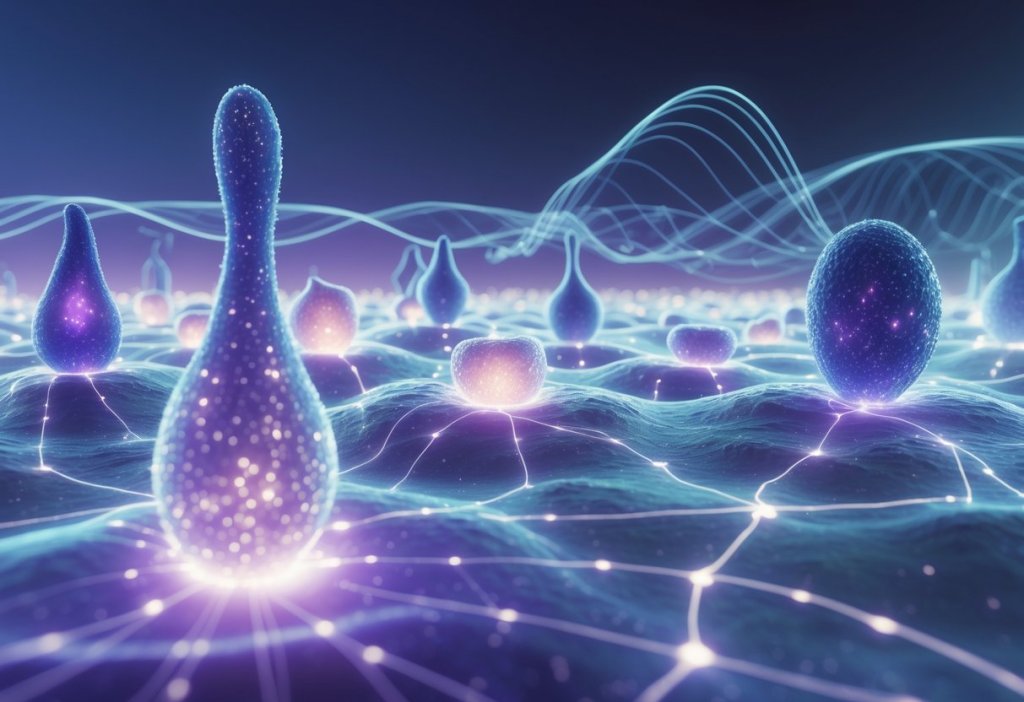
Morphic fields are invisible organizing structures that shape the development and behavior of all living systems, from single cells to entire societies, through a process called morphic resonance that connects similar forms across time and space. These fields work like invisible blueprints that guide how things grow and organize themselves. They suggest that your thoughts, memories, and even your sense of being watched might extend beyond your brain through fields that connect you to others.
This concept bridges science and spirituality by proposing that consciousness and memory are not locked inside your head but part of a larger interconnected system. While morphogenetic fields were first introduced in 1910 in mainstream biology, Sheldrake expanded this idea to include all of nature. Understanding morphic fields can change how you think about learning, memory, and your connection to the world around you.
Key Takeaways
- Morphic fields are organizing structures that shape living systems through patterns inherited from past similar forms
- Morphic resonance explains how memories and behaviors can spread across species without direct contact or genetic changes
- The theory connects biological development, consciousness, and collective memory in ways that challenge traditional scientific views
Morphic Fields, Morphogenetic Fields, and Morphic Resonance
Morphic fields organize biological development and behavior through invisible patterns that carry memory across time and space. These fields operate through morphic resonance, allowing similar patterns from the past to influence present forms and behaviors.
Rupert Sheldrake’s Theory of Formative Causation
British biologist Rupert Sheldrake introduced his theory of formative causation in his 1981 book A New Science of Life. The theory proposes that morphic fields guide the development and behavior of organisms beyond what genes alone can explain.
Sheldrake developed these ideas during his fifteen years researching plant development at Cambridge University. He concluded that genes and their products cannot fully account for morphogenesis. While genes enable organisms to make specific proteins, they don’t explain the organization itself.
The hypothesis suggests that memory is inherent in nature, with most laws of nature functioning more like habits than fixed rules. These habits strengthen through repetition across time. Each time a pattern occurs, it becomes more likely to happen again in similar systems.
Biological Evidence and Developmental Biology
Morphogenetic fields were first introduced in 1910 by Alexander G. Gurwitsch. Ross Granville Harrison provided experimental support through his work transplanting newt embryo fragments. He identified fields of cells producing specific organs like limbs and gills.
Your body’s development depends on these organizing fields working alongside genetic information. Genes like the Hox genes are highly similar across fruit flies, worms, fish, and mammals. Yet these organisms look completely different, showing that genes alone cannot determine form.
Morphic fields work by imposing patterns on otherwise random activity. They cause structures like microtubules to form in specific cell locations. Single-celled organisms like diatoms and radiolarians form complex mineral skeletons that require more than just protein synthesis.
Morphic Resonance and Collective Memory
Morphic resonance transmits fields from past members of a species through non-local connections across time and space. This process creates a collective memory that you both draw upon and contribute to. The fields of Afghan hounds and poodles evolved to differ from their wolf ancestors through this mechanism.
Laboratory experiments have tested whether learned behaviors spread faster than expected. If rats of a particular breed learn a new trick at Harvard University, rats of that breed should learn it faster worldwide. Evidence discussed in A New Science of Life suggests this actually occurs.
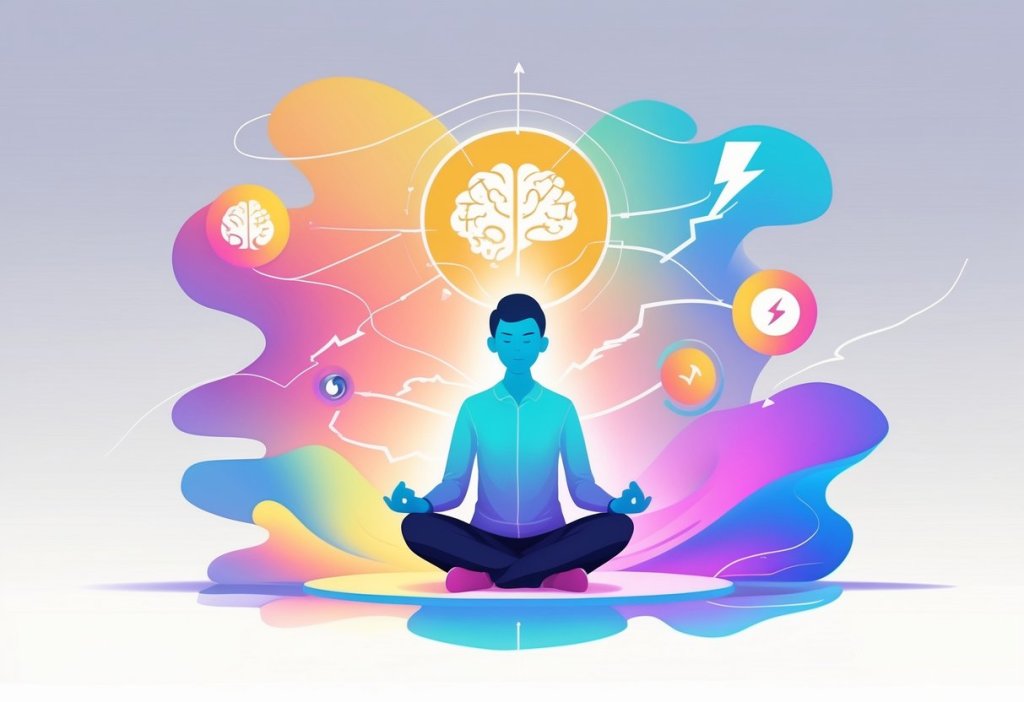
Your individual memories may also depend on resonance with your brain’s past states. This means not all memories need physical storage inside your brain. The hypothesis extends beyond biology to explain phenomena like telepathy and the sense of being stared at, topics Sheldrake explored in The Sense of Being Stared At.
Applications Across Species and Social Groups
Social groups organize through morphic fields, visible in schools of fish and flocks of birds. These fields coordinate group behavior without requiring direct communication between all members. Each individual contributes to the collective memory while drawing from it.
Human societies transmit memories through cultural rituals that create resonance with past participants. The Jewish Passover, Christian communion, and American Thanksgiving function as ritual re-enactments connecting present to past. Your participation in these rituals links you to everyone who performed them before.
The nervous system inherits organizational patterns through morphic resonance, conveying instinctive memory. Animals inherit successful species habits as instincts. You inherit bodily, emotional, mental, and cultural habits, including language patterns that have strengthened through countless repetitions across generations.
Morphic Field Theory in Science, Spirituality, and Consciousness Research
Morphic field theory bridges multiple domains by proposing that memory and patterns exist throughout nature as organizing fields. This framework connects physical sciences with consciousness studies while addressing energetic phenomena that traditional science often overlooks.
Science and Spirituality Connection
Rupert Sheldrake’s morphic field theory offers you a framework that connects scientific inquiry with spiritual concepts. The theory proposes that memory is inherent in nature, functioning through fields rather than being stored only in physical matter.
Your understanding of this connection deepens when you consider how morphic fields operate similarly to magnetic fields. Just as magnetic fields extend beyond physical magnets, morphic fields extend beyond the organisms or systems they organize.
Key intersections include:
- Pattern formation in biological development
- Collective memory across species
- Non-physical information transmission
- Organizational principles in nature
The theory resonates with spiritual traditions that have long described invisible fields organizing reality. Unlike metaphysical claims without testable predictions, morphic resonance offers you specific hypotheses about how information transfers across time and space through similarity rather than energy transmission.
Energetic and Subtle Energy Fields
You encounter biofield science and human energy field research when exploring morphic fields’ relationship to energetic phenomena. These fields organize patterns of activity rather than transmitting energy in conventional physics terms.
Morphic fields work by imposing patterns on otherwise random activity. Your cells crystallize microtubules in specific locations because morphic fields guide this organization, even though the building blocks exist throughout the cell.
Field characteristics you should understand:
- Self-organizing wholes that maintain system integrity
- Spatio-temporal patterns organizing rhythmic activity
- Probabilistic structures rather than deterministic forces
- Nested hierarchies where fields contain other fields
Research on subtle energy fields connects to morphic resonance through the concept of extended mind. Your mental fields extend beyond your brain through intention and attention, similar to how cell phone fields extend beyond the device itself.
Quantum Biology and Nonlocal Consciousness
Quantum physics provides you with parallels to morphic resonance, particularly through nonlocal phenomena. David Bohm’s implicate order shares conceptual similarities with how morphic fields organize reality through non-local connections.
Your consciousness operates through morphic fields that connect you to collective memory. When you think of someone before they call, you’re experiencing telephone telepathy mediated by morphic field connections rather than conventional signal transmission.
Nonlocal consciousness means your awareness isn’t confined to your skull. Morphic resonance allows past patterns to influence present ones across space and time without energy transfer. This explains phenomena like:
- Species-wide learning acceleration
- Instinctive behaviors inherited as habits
- Telepathic connections between bonded individuals
- Collective consciousness within social groups
The theory doesn’t claim precognition or future influence. Morphic resonance explains past-to-present patterns, not future causation, unless you modify your understanding of time itself.
Holistic and Metaphysical Science Concepts
You find holistic science theory embedded in morphic field concepts through their emphasis on integrated wholes rather than reductionist parts. Genes enable protein production but don’t explain the organization creating your body’s form.
Metaphysical science concepts emerge when considering unified field of consciousness theories. Your individual mind contributes to and draws from species-level memory fields, creating a collective repository of learned behaviors and patterns.
Integration points include:
| Concept | Morphic Field Application |
|---|---|
| Collective consciousness | Social groups organized by shared fields |
| Natural laws | Evolved habits rather than eternal rules |
| Memory storage | Non-local resonance instead of physical encoding |
| Ritual practice | Reinforcing morphic fields through repetition |
Your participation in cultural rituals connects you to morphic fields maintained through repetition. Religious ceremonies and traditional practices strengthen these fields by resonating with all previous performances of the same ritual.
The theory suggests nature itself evolves through habit formation. Rather than fixed laws appearing at the Big Bang, your universe develops patterns that become increasingly probable through repetition. This evolutionary perspective applies to physical, chemical, biological, and cultural systems alike.
Frequently Asked Questions
Morphic field theory raises questions about how invisible organizing fields might connect individual consciousness to larger collective patterns and influence biological systems at quantum levels. These concepts bridge traditional scientific inquiry with investigations into energy fields that conventional physics has yet to fully explain.
What are the implications of morphogenetic fields on the concept of collective consciousness?
Morphogenetic fields suggest that your thoughts and behaviors might connect to a larger shared memory that extends beyond your individual brain. This concept relates to Jung’s collective unconscious, where patterns of experience accumulate across groups.
According to morphic field theory, when you learn something new, you make it slightly easier for others to learn the same thing through morphic resonance. This transfer of information happens across space and time based on similarity. The field essentially acts as a memory bank that you can access without direct physical connection.
Your participation in collective behaviors and cultural patterns may strengthen these fields. The more people engage in specific practices or hold certain beliefs, the stronger the morphic field becomes for those patterns.
How does morphic resonance relate to quantum biology in terms of consciousness?
Morphic resonance involves information transfer that current physics textbooks don’t fully explain, but it may connect to quantum phenomena. The physicist David Bohm proposed that morphic effects could work through quantum physics concepts like the implicate order and non-locality.
You encounter quantum non-locality when particles remain connected regardless of distance. This resembles how morphic resonance works across space and time. Your consciousness might operate through similar non-local connections that quantum biology is beginning to investigate.
The challenge you face is that quantum physics calculations become extremely complex for large biological systems. However, physicist Lee Smolin proposed the “principle of precedence” in 2012, suggesting nature develops habits over time. This aligns closely with morphic resonance theory.
What scientific evidence supports the existence of human energy fields in biofield science?
Rupert Sheldrake has published more than 80 papers in peer-reviewed journals testing hypotheses related to morphic fields and extended mind effects. His research includes experiments on the sense of being stared at and telepathic connections between people.
You can find evidence in studies showing that people often know when someone is looking at them from behind. This suggests your attention extends beyond your physical body. Research on telepathy between mothers and babies and between pet owners and their animals provides additional data.
The IQ increases observed over recent decades, called the Flynn Effect, may demonstrate morphic resonance at work. As more people learn specific cognitive skills, you might find it easier to develop those same abilities through the strengthened morphic field.
What potential connections exist between nonlocal consciousness and holistic science theories?
Your consciousness may not be confined to your brain according to the extended mind hypothesis. Morphic fields organize systems at all levels from atoms to organisms to social groups, creating wholeness that exceeds the sum of individual parts.
Holistic science theories propose that you cannot fully understand living systems by breaking them down into components alone. The morphic field provides the organizing principle that holds systems together. This represents a shift from mechanistic to holistic thinking about nature.
When you focus your attention on something or someone, that act of intention may extend through morphic fields. Your mental fields interact with social fields and the fields of other organisms. This creates connections that operate outside normal physical boundaries.
How do metaphysical science concepts integrate into the study of subtle energy fields?
You encounter metaphysical concepts when exploring phenomena that existing physics cannot yet explain. Morphic resonance and telepathy have no explanation in standard physical theories, but Sheldrake proposes they depend on physical effects not yet recognized by science.
These are not supernatural phenomena outside natural order. Instead, you are looking at testable hypotheses about information transfer and field effects. The concept connects to Vedic ideas of Akashic Records, which describe a library of all human experiences and memories.
Your investigation of subtle energy fields requires both scientific rigor and openness to phenomena beyond current measurement capabilities. Morphogenetic fields guide healing processes from biochemistry to embryonic development, shaping your physical being at fundamental levels.
What role does the unified field of consciousness play in shaping science and spirituality discussions?
The unified field concept suggests that your individual consciousness participates in a larger organizing field that connects all minds. Morphic fields contain inherent memory through morphic resonance, creating collective memory similar to spiritual traditions’ descriptions of universal consciousness.
You bridge science and spirituality when examining how immaterial fields influence material reality. The hypothesis of formative causation provides testable predictions while addressing questions traditionally considered spiritual. This allows you to investigate consciousness scientifically without reducing it to brain chemistry alone.
Your exploration of these connections represents a shift toward holistic paradigms in science. When morphic field theory gains validation, you move closer to integrating objective scientific method with subjective experiences of interconnectedness. This doesn’t require abandoning scientific rigor but expanding what you consider legitimate subjects for investigation.



Leave a comment