Quantum consciousness explores the fascinating link between our minds and the strange world of quantum physics.
Scientists are studying if quantum processes in the brain could explain human awareness.
This idea pushes us to think about reality in new ways.
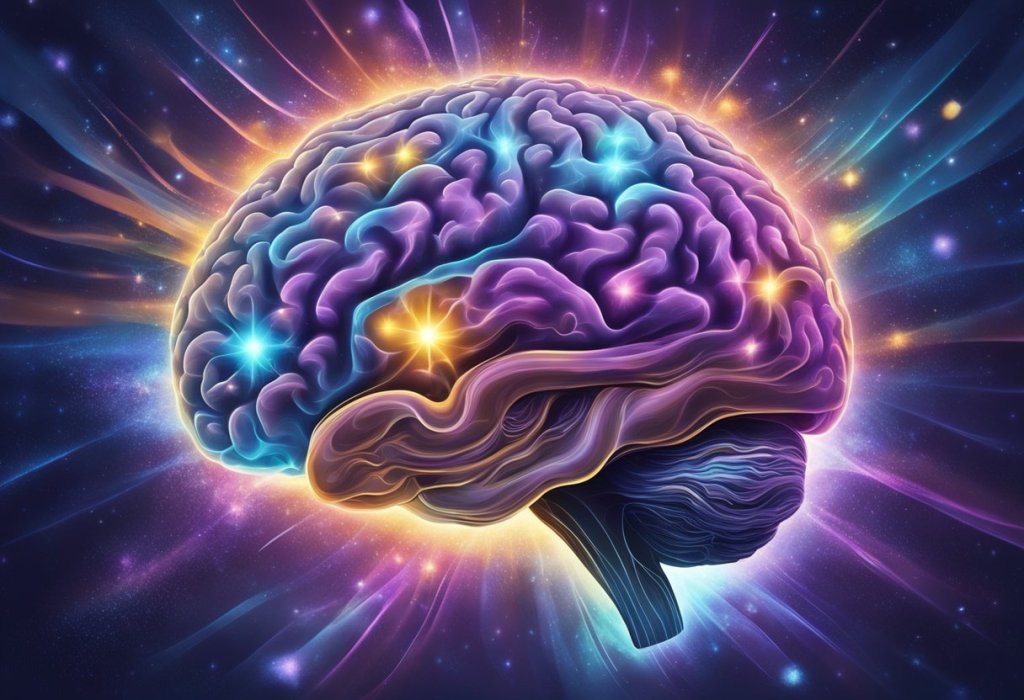
Some experts think quantum effects may shape how we see the world.
Our thoughts might influence reality at a tiny scale, blurring the line between mind and matter.
This concept excites many, but it’s still not proven.
We need more research to understand if quantum mechanics really plays a role in our brains.
Key Takeaways
- Quantum consciousness suggests a link between the mind and quantum physics
- Our thoughts may affect reality at a microscopic level
- This field of study challenges our understanding of awareness and reality
The Emergence of Quantum Consciousness
Quantum consciousness explores how the mind may influence reality through quantum processes.
This idea has roots in early quantum theory and continues to evolve through modern research.
Historical Context and Key Theories
The link between quantum physics and consciousness emerged in the early 20th century.
Niels Bohr suggested quantum mechanics might explain consciousness. This sparked debate among scientists about the role of the observer in quantum experiments.
In the 1980s, new theories connected quantum effects to brain function.
The Orchestrated Objective Reduction (Orch-OR) theory proposed that quantum processes in brain cells create consciousness.
Some researchers think conscious intention might affect quantum states.
Prominent Figures: Bohr, Penrose, and Hameroff
Niels Bohr laid early groundwork for quantum consciousness ideas. He proposed that the observer plays a key role in quantum measurements.
Roger Penrose, a mathematician, developed the Orch-OR theory with Stuart Hameroff.
Penrose suggested quantum effects in microtubules within neurons could explain consciousness.
Stuart Hameroff, an anesthesiologist, partnered with Penrose on Orch-OR. He focused on how anesthesia affects consciousness at a quantum level.
These scientists pushed quantum consciousness research forward.
Their work sparked new studies into how the brain might connect to quantum processes.
Understanding Consciousness
Consciousness remains one of the most puzzling aspects of human existence.
Scientists and philosophers continue to debate its nature and how it arises from brain activity.
Defining Consciousness
Consciousness refers to our awareness of our thoughts, feelings, and surroundings. It allows us to have subjective experiences and a sense of self.
The nature of consciousness is hard to pin down.
Some view it as an emergent property of complex brain activity. Others see it as more fundamental.
There’s no clear agreement on how consciousness arises from neurons firing.
Brain scans show patterns of activity linked to conscious experiences. But the exact mechanisms remain unknown.
Researchers study different levels of consciousness. These range from basic awareness to higher-order thinking and self-reflection.
Consciousness in Classical Physics vs Quantum Physics
Classical physics views consciousness as an outcome of brain processes. It sees the mind as separate from the physical world.
This approach treats the brain like a complex computer. Consciousness emerges from information processing in neural networks.
Quantum physics offers a different perspective.
It suggests consciousness may be linked to quantum processes in the brain.
Some scientists think quantum effects in neurons could explain consciousness.
This idea remains controversial and unproven.
Quantum theories of mind propose a deeper connection between consciousness and reality. They suggest the observer plays a key role in shaping the world.
Fundamentals of Quantum Mechanics
Quantum mechanics describes nature at the smallest scales.
It explains how particles behave and interact at the atomic and subatomic level.
This branch of physics has some key ideas that are very different from everyday life.
Wave Function and Superposition
The wave function is central to quantum mechanics. It describes the quantum state of a particle or system. This mathematical function gives the probability of finding a particle in a certain place or state.
Superposition is a key feature of quantum systems.
It means a particle can exist in multiple states at once. For example, an electron can spin up and down at the same time. This only lasts until the particle is measured.
Quantum particles can be in many states at once, unlike objects we see every day. When measured, the wave function “collapses” and the particle takes on a definite state.
Entanglement and Non-Locality
Quantum entanglement links two or more particles. Their properties become connected, even if they are far apart.
Measuring one particle instantly affects its entangled partner.
This strange connection between particles seems to defy the speed of light. Scientists call this “spooky action at a distance.” It’s a key part of quantum non-locality.
Entanglement has practical uses. It’s important for quantum computing and cryptography. Scientists are still trying to fully understand how it works.
Quantum Field Theory
Quantum field theory combines quantum mechanics with special relativity. It describes subatomic particles as excited states of underlying fields.
These fields exist everywhere in space. Particles are seen as vibrations in these fields.
This theory explains how particles can be created and destroyed.
Quantum field theory is very successful. It accurately predicts many particle physics experiments. It’s the basis for the Standard Model of particle physics.
Examining Quantum Effects in Biology
Quantum phenomena may play important roles in biological systems. Scientists are exploring how quantum effects could influence processes like photosynthesis, enzyme reactions, and even brain function.
Photons and Neurons
Light particles called photons interact with neurons in fascinating ways. Photons can trigger neurotransmitter release in brain cells. This happens when photons are absorbed by light-sensitive proteins.
Some researchers think quantum effects may be involved in vision. The human eye can detect very small numbers of photons. This high sensitivity could rely on quantum processes.
Biophotons are weak light emissions from cells. Scientists are studying if biophotons play a role in cell signaling. This could allow quantum effects to influence neural activity.
Microtubules and Quantum States
Microtubules are tiny structures in cells. They form a skeleton-like framework.
Some scientists believe microtubules may sustain quantum states.
The Orch OR theory suggests microtubules in neurons can maintain quantum coherence. This means particles remain in sync over time. If true, it could allow quantum computing in the brain.
Critics argue the warm, wet environment of cells disrupts quantum states too quickly. But some evidence indicates certain proteins may protect quantum effects in microtubules.
Quantum Biology and Neural Networks
Quantum biology explores how quantum phenomena may influence living systems. This emerging field considers effects like quantum tunneling and entanglement.
Some researchers propose neural networks may use quantum processes. This could potentially increase information processing in the brain.
Quantum tunneling might play a role in how signals move between neurons. Entanglement could allow instant communication across brain regions.
Scientists are developing new tools to study potential quantum effects in the brain. Advanced imaging techniques may reveal quantum signatures in neural activity.
Perception and Reality
Our senses and minds shape how we experience the world around us. This raises deep questions about the nature of reality and our role in creating it.
Observer Effect and Measurement
The observer effect in quantum mechanics shows that the act of observing can change the behavior of particles. This suggests a link between consciousness and physical reality at the quantum level.
When scientists measure quantum systems, the act of measurement itself impacts the results. This challenges the idea of an objective reality that exists independently of observation.
Some interpret this to mean human consciousness plays an active role in shaping reality. Others see it as a limitation of measurement tools rather than evidence of mind influencing matter.
Information and Representation
The brain processes raw sensory data to construct our perception of reality. This involves filtering, combining, and interpreting information from our senses.
What we perceive as reality may be the brain’s representation or model of the external world. Our subjective experience emerges from this internal simulation.
Some theorists propose that information, not matter, forms the fundamental basis of reality. In this view, the physical world arises from the processing of information.
Mind and Matter Interconnectedness
The boundary between mind and matter may be less fixed than it appears. Some philosophers argue that consciousness and physical reality are deeply intertwined.
Nondual philosophies suggest reality emerges from the interplay of subjective experience and the objective world. Neither pure materialism nor pure idealism fully captures this relationship.
Quantum entanglement demonstrates interconnectedness at the subatomic level. This has led some to speculate about a universal field of consciousness connecting all things.
Quantum Consciousness and Philosophy
Quantum theory has sparked new debates in philosophy about the nature of consciousness and reality. These ideas challenge traditional views and propose novel ways of understanding the mind’s relationship to the physical world.
Materialism vs Panpsychism
Materialism holds that only physical matter exists, while panpsychism suggests consciousness is a fundamental feature of reality. Quantum theory has led some philosophers to question strict materialism. They argue that quantum effects in the brain may allow for consciousness to influence physical reality.
Panpsychists propose that consciousness is universal and inherent in all matter. This view aligns with interpretations of quantum mechanics that give a special role to the observer. Critics argue there’s no evidence for universal consciousness.
The debate remains unresolved. More research is needed to determine if quantum processes play a key role in brain function and consciousness.
Philosophical Interpretations of Quantum Theory
Quantum theory has several competing philosophical interpretations. The Copenhagen interpretation sees reality as fundamentally probabilistic. It claims particles only take on definite properties when measured.
Other views like the many-worlds interpretation propose that all possible outcomes occur in parallel universes. Some philosophers argue this explains the appearance of free will and conscious choice.
Quantum theory also raises questions about the nature of physical law and causality. These issues connect to longstanding philosophical debates about determinism and free will. As quantum science advances, it continues to shape how we think about the foundations of reality.
Mysteries of Human Consciousness
Human consciousness remains one of the most puzzling aspects of our existence. Scientists and philosophers continue to grapple with fundamental questions about its nature and origins.
The Hard Problem of Consciousness
The hard problem of consciousness refers to the challenge of explaining how subjective experiences arise from physical processes in the brain. This puzzle has stumped researchers for decades.
Some scientists propose that quantum processes may play a role in consciousness, potentially linking mind and matter at a fundamental level. However, this idea remains highly debated.
Neuroscientists have made progress in identifying brain regions involved in conscious experiences. The prefrontal cortex and thalamus appear to be key players. Yet the exact mechanisms remain unclear.
Consciousness and Anesthesia
Studying how anesthesia affects consciousness provides valuable insights into its workings. General anesthetics induce a reversible loss of awareness and responsiveness.
Research suggests anesthetics may disrupt communication between brain regions. This interferes with the integration of information thought to be crucial for consciousness.
Some scientists theorize that anesthetics may affect quantum coherence in the brain. This could potentially explain how they switch off consciousness so effectively.
Interestingly, memory formation is also impaired under anesthesia. This hints at a close link between consciousness and our ability to form new memories.
Quantum Mechanics and Free Will
Quantum mechanics raises intriguing questions about free will and decision-making. The probabilistic nature of quantum events challenges traditional views of determinism and causality.
Determinism vs Free Will
Quantum mechanics introduces uncertainty at the subatomic level. This apparent randomness of quantum events conflicts with strict determinism.
Some argue quantum indeterminacy could allow for free will. If quantum processes influence brain activity, decisions may not be fully predetermined.
Others contend quantum randomness doesn’t equate to free choice. They argue determinism still applies at larger scales relevant to human behavior.
The debate remains unresolved. Scientists continue exploring potential links between quantum mechanics and conscious decision-making.
Probability, Certainty, and Decisions
Quantum mechanics deals with probabilities rather than certainties. This probabilistic nature extends to measurements and observations.
In decision-making, the brain may leverage quantum processes. Some theories propose consciousness connects to quantum phenomena in neural networks.
These ideas suggest decisions emerge from a mix of deterministic and probabilistic factors. Quantum effects could introduce an element of unpredictability.
Critics argue macroscopic brain processes are too large for quantum effects to matter. They contend classical physics adequately explains decision-making.
The role of quantum mechanics in human choices remains an open question. It continues to spark debate among physicists and philosophers.
The Role of Art in Quantum Reality

Art offers unique ways to explore and visualize complex quantum concepts. Creative works can bridge the gap between abstract scientific ideas and human perception.
Artistic Representations of Quantum Phenomena
Artists use various mediums to depict quantum phenomena. Paintings may show particle-wave duality through blurred, overlapping forms.
Sculptures can represent quantum entanglement with intertwined shapes.
Digital art allows for dynamic visualizations of quantum states. Animated pieces might show electrons jumping between energy levels or the collapse of wave functions.
Sound artists create audio interpretations of quantum events. They use tones and rhythms to represent particle interactions or quantum fluctuations.
Fractals and the Complexity of Nature
Fractal art mirrors the intricate patterns found in nature. These self-similar shapes repeat at different scales, much like quantum structures.
Computer-generated fractals can produce stunning visual representations of quantum chaos. The Mandelbrot set, for example, shows infinite complexity from simple mathematical rules.
Fractal art helps viewers grasp the concept of quantum self-similarity. It illustrates how small-scale quantum effects can influence larger systems.
Artists also use fractals to explore the boundary between order and randomness in quantum systems. This reflects the delicate balance found in quantum mechanics.
Implications and Applications
The intersection of quantum mechanics and consciousness opens up exciting possibilities. It may revolutionize technology and our understanding of the human mind.
Quantum Computing and Information Processing
Quantum effects could enable powerful new computing capabilities. Quantum computers may solve complex problems much faster than classical computers. This could accelerate research in fields like drug discovery and materials science.
Quantum information processing may also mimic how the brain works.
Scientists are exploring quantum effects in neural networks, which could lead to more brain-like artificial intelligence.
Researchers are studying how quantum measurements might relate to conscious observation. This may shed light on the nature of reality and perception.
Future Research Directions in Quantum Consciousness
Scientists aim to better understand potential quantum processes in the brain. They are looking for evidence of quantum effects in neural structures.
Some researchers are exploring links between quantum mechanics and theories of consciousness.
This includes studying how quantum entanglement might relate to conscious experiences.
Future studies may examine connections between quantum physics and general relativity. This could provide insights into consciousness and gravity.
New experimental techniques are needed to test quantum consciousness theories. Advances in brain imaging and quantum sensors will be crucial for progress in this field.
Frequently Asked Questions
Quantum consciousness explores fascinating connections between the mind and reality. It raises thought-provoking questions about how our awareness may interact with the quantum world.
How does consciousness manifest within quantum mechanics?
Some scientists think consciousness might emerge from quantum processes in the brain. The observer effect in quantum mechanics suggests observation influences particle behavior.
This has led to theories that consciousness plays a role in shaping reality at the quantum level. But measuring quantum effects in the brain remains challenging with current technology.
In what ways could quantum entanglement be related to human consciousness?
Quantum entanglement describes particles that remain connected even at great distances. Some researchers propose entanglement in the brain could enable quantum information processing.
This might explain certain aspects of consciousness like non-local awareness. But scaling up quantum effects to influence macroscopic brain function remains controversial.
Does current scientific evidence suggest that the human brain operates on quantum principles?
Evidence for quantum processes in the brain is limited. Most neuroscientists view the brain as too “warm and wet” for delicate quantum states to persist.
However, some studies hint at potential quantum effects in biological systems. More research is needed to determine if quantum mechanics plays a significant role in brain function.
Can conscious thought influence the physical world according to quantum theories?
Some interpretations of quantum mechanics propose consciousness can affect reality. The idea stems from quantum particles existing in multiple states until observed.
This led to speculation that conscious observation “collapses” possibilities into definite outcomes. But many scientists disagree, viewing it as a misinterpretation of quantum theory.
What implications would the existence of quantum consciousness have on our understanding of the afterlife?
If consciousness arises from quantum processes, it could theoretically persist after death. Some propose quantum information might not be lost when the physical brain dies.
This has led to speculation about consciousness surviving bodily death. But such ideas remain highly controversial and lack scientific evidence.
How is the hypothesis that consciousness creates reality viewed within the scientific community?
Most scientists are skeptical of claims that consciousness directly shapes reality.
They view it as an oversimplification of quantum mechanics.
The idea remains a fringe concept in mainstream physics.
Critics argue it misapplies quantum principles to macroscopic systems like the brain.





Leave a reply to The Consciousness of Christ: Understanding the Bible from a Higher State of Awareness – Potent U Cancel reply