Have you ever wondered about the power of your mind? Hypnosis is a fascinating tool that taps into your inner potential. Many people think hypnosis involves a therapist controlling your thoughts, but that’s not true. All hypnosis is really self-hypnosis – you are the one in control of your mind and experiences.

Self-hypnosis is a skill you can learn and use to improve your life. It’s a way to access your subconscious mind and make positive changes.
You don’t need special equipment or a hypnotist. With practice, you can guide yourself into a hypnotic state and work on personal goals.
Learning self-hypnosis can help with stress, confidence, and breaking bad habits.
You remain aware during the process and can stop anytime. It’s a safe and natural way to harness your mind’s power.
Let’s explore how you can use self-hypnosis to enhance your life.
Key Takeaways
- You are always in control during hypnosis, as it’s a self-directed process
- Self-hypnosis is a learnable skill that can help you make positive changes
- Regular practice can lead to improvements in various areas of your life
Understanding Hypnosis
Hypnosis involves focused attention and heightened suggestibility. It taps into your mind’s hidden potential for change and self-improvement.
Defining Hypnosis and Self-Hypnosis
Hypnosis is a state of focused awareness and relaxation. During hypnosis, you become more open to suggestions. Your critical thinking takes a back seat, allowing new ideas to sink in.
Self-hypnosis means you guide yourself into this state. You don’t need someone else to hypnotize you. With practice, you can learn to enter a trance on your own.
In both cases, you remain in control. Hypnosis can’t make you do anything against your will. It simply helps you tap into your mind’s natural abilities.
Roles of the Conscious and Unconscious Mind
Your conscious mind handles daily tasks and logic. It’s the part that makes decisions and solves problems.
On the other hand, the unconscious mind stores memories, beliefs, and habits.
During hypnosis, your conscious mind relaxes. This allows easier access to your unconscious. You can then work on changing unhelpful patterns or beliefs.
Your unconscious mind is powerful. It controls many body functions without you thinking about them. Hypnosis helps you use this power for positive change.
Remember, you’re always in charge. Hypnosis just helps you focus your mind’s natural abilities.
The Science of Hypnosis

Hypnosis is a powerful tool used in therapy and self-improvement. It works by changing brain activity and altering your focus and attention.
Hypnosis in Therapeutic Settings
You might see hypnosis used in many types of therapy. Hypnotherapists use it to help with stress, anxiety, and pain.
During a hypnosis session, you enter a relaxed state.
In this state, you’re more open to suggestions. This can help you change thoughts and behaviors. Hypnosis has shown good results for:
- Quitting smoking
- Weight loss
- Sleep problems
- Phobias
Many people find hypnosis helps them feel calmer and more in control.
Mechanisms of Action in Hypnosis
When you’re hypnotized, your brain goes through changes. Brain scans show different areas become more or less active. This affects how you process information and feelings.
Hypnosis can change how you feel pain. It may help you focus less on discomfort. Some people need less pain medicine after hypnosis.
Hypnosis also impacts your stress response. It can lower your heart rate and blood pressure. This is why it’s useful for stress and anxiety relief.
You become more focused during hypnosis. This helps you work on specific goals or problems.
Self-Hypnosis Techniques
Self-hypnosis techniques can help you relax, focus, and enhance your mental abilities. These methods combine relaxation, visualization, and mindfulness to create powerful tools for personal growth.
Hypnotic Induction and Deep Relaxation
To start self-hypnosis, find a quiet place where you won’t be disturbed.
Sit or lie in a comfortable position. Close your eyes and take slow, deep breaths.
Focus on relaxing each part of your body, starting from your toes and moving up to your head. This is called progressive relaxation.
As you relax, imagine a peaceful scene or a place where you feel safe and calm. This could be a beach, a forest, or any location that brings you comfort.
Count backwards from 10 to 1, feeling more relaxed with each number. By the time you reach 1, you’ll be in a deep state of relaxation and ready for the next steps.
Visualization and Memory Enhancement
In your relaxed state, use your imagination to create vivid mental images.
Picture yourself achieving your goals or overcoming challenges.
Visualization techniques can help improve your memory and performance.
Imagine yourself easily remembering important information or performing tasks with confidence.
Try this exercise: Visualize a familiar room in your home. Notice the details – colors, textures, and objects. This practice can sharpen your mental focus and memory.
You can also use visualization to rehearse future events. Picture yourself giving a presentation or taking an exam with calmness and success.
Meditation and Mindfulness Integration
Combine self-hypnosis with meditation and mindfulness for even greater benefits.
Start by focusing on your breath, noticing each inhale and exhale.
Practice mindfulness by observing your thoughts without judgment. Let them pass like clouds in the sky, always returning your attention to your breath.
Use positive affirmations during your practice.
Repeat phrases like “I am calm and confident” or “I easily achieve my goals” to reinforce positive beliefs.
End your session by slowly counting up from 1 to 5.
With each number, feel yourself becoming more alert and refreshed. Open your eyes, feeling relaxed and energized.
Practical Applications of Self-Hypnosis
Self-hypnosis offers powerful tools for personal growth and well-being. You can use it to manage stress, boost focus, improve sleep, lose weight, and quit smoking.
Self-Hypnosis for Stress and Anxiety Management
Self-hypnosis can help you reduce stress and anxiety. By entering a relaxed state, you gain control over your thoughts and emotions. Try this simple technique:
- Find a quiet spot and sit comfortably
- Take slow, deep breaths
- Visualize a peaceful place
- Repeat calming phrases to yourself
With practice, you’ll learn to quickly enter this state when feeling stressed.
You can also create personalized scripts to address specific anxiety triggers.
Self-hypnosis helps you reframe negative thoughts. You’ll develop a more positive outlook and feel more confident in stressful situations.
Enhancing Focus and Sleep Quality
Self-hypnosis can sharpen your focus and improve your sleep.
To boost concentration:
- Set a clear goal
- Enter a hypnotic state
- Visualize yourself focused and productive
- Use affirmations like “I am focused and alert”
For better sleep, try this routine before bed:
- Relax your body progressively
- Imagine a peaceful scene
- Count down from 10, feeling sleepier with each number
Regular practice can help you fall asleep faster and enjoy deeper, more restful sleep.
Self-Hypnosis in Weight Loss and Quitting Smoking
Self-hypnosis can be a powerful tool for weight loss and smoking cessation.
For weight loss:
- Visualize your ideal body
- Create positive associations with healthy foods
- Imagine yourself enjoying exercise
To quit smoking:
- Picture yourself as a non-smoker
- Associate cigarettes with negative images
- Reinforce your reasons for quitting
Combine self-hypnosis with other strategies like healthy eating or nicotine replacement therapy for best results. Consistency is key – practice daily for the most benefit.
Overcoming Resistance and Empowerment

Self-hypnosis can be a powerful tool for personal growth. It helps you break through mental barriers and tap into your inner strength. Let’s explore how to overcome resistance and achieve empowerment through self-hypnosis.
Addressing Resistance to Self-Hypnosis
Resistance to self-hypnosis is common. You might feel skeptical or unsure about its effectiveness. To overcome this, start by understanding that resistance is normal. It’s part of the process and can help you learn more about yourself.
Try these steps to address resistance:
- Identify your doubts
- Research the science behind self-hypnosis
- Start with short, simple sessions
- Be patient with yourself
Remember, self-hypnosis is about self-empowerment. You’re in control the whole time. Trust the process and give it a chance to work for you.
Fostering Self-Awareness and Self-Confidence
Self-hypnosis can boost your self-awareness and confidence. As you practice, you’ll start to notice your thoughts and feelings more clearly. This increased awareness helps you make positive changes in your life.
To build self-confidence through self-hypnosis:
- Use positive affirmations during your sessions
- Visualize yourself succeeding in your goals
- Challenge negative self-talk
Mental training and hypnosis can help you develop inner strength. This makes it easier to face daily challenges with grace. As your confidence grows, you’ll find yourself more capable of handling life’s ups and downs.
Achieving Personal Empowerment Through Self-Hypnosis
Self-hypnosis is a powerful tool for personal empowerment. It allows you to tap into your inner resources and make lasting changes in your life. Through regular practice, you can reshape your thoughts and behaviors.
Key benefits of self-hypnosis for empowerment:
- Helps you identify and change limiting beliefs
- Improves focus and motivation
- Enhances problem-solving skills
- Boosts emotional resilience
Self-hypnosis creates a mental environment where change feels possible. You can use it to overcome bad habits and dissolve mental blocks. With time and practice, you’ll find yourself more empowered to create the life you want.
Advanced Self-Hypnosis Strategies

Self-hypnosis can be a powerful tool for personal growth and change. These advanced techniques can help you deepen your practice and achieve more profound results.
Guided Self-Hypnosis and Its Advantages
Guided self-hypnosis combines the benefits of traditional hypnosis with self-directed practice. You can use audio recordings or scripts to guide yourself into a trance state. This method is great for beginners and experienced practitioners alike.
The main advantage is structure. A guide helps you stay focused and move through the process smoothly. It can also introduce new ideas or perspectives you might not have considered on your own.
To get started, find a quiet place where you won’t be disturbed. Choose a recording or script that aligns with your goals. As you listen or read, allow yourself to relax and follow the instructions.
Using Post-Hypnotic Suggestions Effectively
Post-hypnotic suggestions are instructions given during hypnosis that take effect after the session ends. They can help you make lasting changes in your thoughts, feelings, or behaviors.
To create effective post-hypnotic suggestions:
- Be specific and positive
- Use present tense
- Make them realistic and achievable
- Repeat them several times during your session
For example, instead of “I won’t feel anxious,” try “I feel calm and confident in social situations.” Reinforce your suggestions by visualizing yourself successfully carrying them out.
Leveraging the Power of Suggestion and Imagination
Your imagination is a powerful tool in self-hypnosis. It can create vivid mental experiences that feel real to your subconscious mind. This can lead to genuine changes in your thoughts and behaviors.
Try using all your senses when visualizing. If you’re imagining a peaceful beach, hear the waves, feel the sand, smell the salt air. The more detailed and immersive your mental image, the more impact it can have.
You can also use symbolic imagery for transformation. Picture yourself shedding old habits like a snake shedding its skin. Or imagine planting seeds of new behaviors and watching them grow.
Practice regularly to strengthen your visualization skills. Over time, you’ll find it easier to create and maintain vivid mental images during self-hypnosis.
Maintaining Practice and Deepening Skills
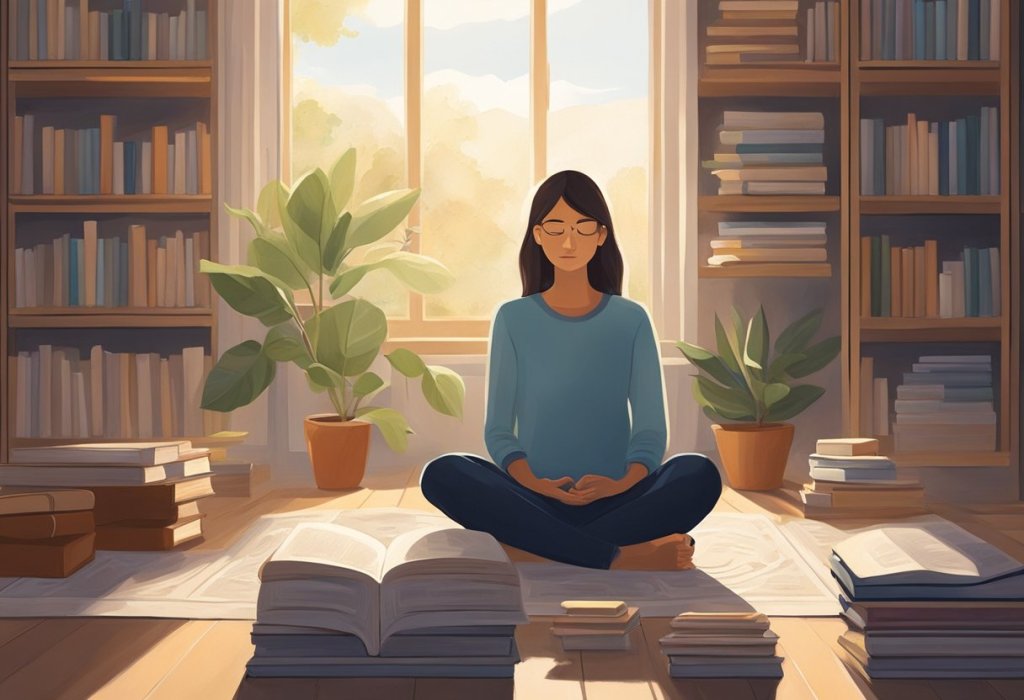
Self-hypnosis skills grow with regular practice and focused effort. You can enhance your abilities by creating routines, managing distractions, and pursuing ongoing personal growth.
Consistency and Routine in Self-Hypnosis
Set aside a specific time each day for self-hypnosis. This helps build a habit and signals to your mind it’s time to relax. Start with 10-15 minutes and gradually increase as you become more comfortable.
Choose a quiet, comfortable spot where you won’t be disturbed. This could be a cozy chair or a meditation cushion.
Use a guided relaxation recording if you find it helpful. As you progress, try practicing without guidance.
Track your sessions in a journal. Note any insights or changes you experience. This can motivate you to keep up your practice.
Dealing with Distractions and Enhancing Concentration
Distractions are normal, especially when starting out. Don’t get frustrated – acknowledge them and gently refocus.
Try these techniques to improve focus:
- Use a white noise machine or app to mask background sounds
- Practice deep breathing before your session
- Visualize a peaceful scene to anchor your attention
If your mind wanders, bring it back to your hypnotic induction. This might be a countdown or a relaxing image.
With time, you’ll find it easier to enter a trance state and maintain focus.
Continual Growth and Transformation
As your skills improve, explore new self-hypnosis techniques. Try different induction methods or work on more challenging goals.
Read books or attend workshops on self-hypnosis to learn advanced methods. This keeps your practice fresh and engaging.
Experiment with using self-hypnosis for various purposes:
- Stress relief
- Habit change
- Creativity enhancement
- Pain management
Pay attention to how self-hypnosis affects your daily life. You might notice improved mood, better sleep, or increased self-awareness.
Frequently Asked Questions
Click the Above Video with Your Middle Mouse Button, to open it in another tab.
Although it cannot be viewed on this site, it is well worth the watch!
Self-hypnosis is a powerful tool for personal growth and transformation. It offers numerous benefits and can be practiced safely with proper knowledge and techniques.
What are the fundamental principles behind self-hypnosis?
Self-hypnosis is based on focused attention and relaxation. You enter a state of heightened suggestibility where you can access your subconscious mind.
The key principle is that you remain in control throughout the process. You choose the suggestions and affirmations to give yourself.
How does one safely practice self-hypnosis?
To practice self-hypnosis safely, find a quiet place where you won’t be disturbed. Choose a comfortable position and use relaxation techniques to enter a trance state.
Set clear intentions before starting. Use positive, present-tense affirmations. Always include a way to emerge from the trance, like counting up from 1 to 5.
What are the potential benefits of engaging in self-hypnosis?
Self-hypnosis can help reduce stress and anxiety. It may improve sleep quality and boost self-confidence.
Many people use it to break bad habits or develop new, positive ones. It can enhance focus, creativity, and performance in various areas of life.
Are there any risks or side effects associated with self-hypnosis?
Self-hypnosis is generally safe when practiced correctly. Some people may experience mild dizziness or disorientation initially.
Avoid using self-hypnosis while driving or operating machinery. If you have a mental health condition, consult a professional before starting.
How does self-hypnosis differ from guided hypnosis sessions?
In self-hypnosis, you guide yourself into and out of the trance state. You create and deliver your own suggestions.
Guided hypnosis involves a hypnotherapist leading you through the process. They provide the suggestions based on your goals.
How can self-hypnosis be effectively integrated into a daily routine?
Start with short sessions, maybe 5-10 minutes.
Choose a consistent time each day, like right after waking up or before bed.
Regular practice is key to improving your skills.
You can use self-hypnosis to set daily intentions or reinforce positive habits.




Leave a comment